Critical Dynamics of the Elevator Slew Gearbox
In the complex ecosystem of mechanized agriculture, the logistics of moving biomass from the field to the transport vehicle is as critical as the cutting process itself. The elevator slew gearbox represents the pivot point of this logistical chain. Located at the base of the discharge elevator on a sugarcane harvester, this transmission unit is responsible for the precise, controlled rotation of the elevator arm. Unlike standard rotational drives, this component must manage a unique set of physical forces: it must torque a heavy, cantilevered structure loaded with tons of green cane or burnt cane, often while the harvester is traversing uneven furrows.
The operational requirement calls for a 180-degree swing capability, allowing the operator to load support trucks on either the left or right side, or directly behind the machine during opening cuts. The elevator slew gearbox serves a dual purpose: providing the kinetic torque to initiate rotation and, more importantly, acting as a dynamic brake. Due to the significant overhanging weight of the elevator structure, gravity constantly exerts a rotational force. Without a high-ratio, self-locking mechanism—typically achieved through advanced worm gear geometry—the elevator would swing uncontrollably on slopes, posing severe safety risks to the support fleet and personnel.
Modern slew drives for this application have evolved from simple open pinion systems to enclosed, hydraulically driven units. They must withstand extreme radial loads and tilting moments. The internal architecture usually features a hardened steel worm shaft mating with a high-tensile bronze worm wheel. This material pairing is deliberate; it prevents galling under high-pressure conditions while providing the necessary “self-locking” characteristic where the output cannot drive the input. This ensures that when the operator releases the hydraulic control joystick, the elevator locks instantly in position, regardless of the terrain angle.
Engineering for the Korean and Global Market Context
While South Korea is not traditionally associated with vast sugarcane plantations like Brazil or India, the country plays a pivotal role in the global heavy machinery supply chain. Korean engineering standards, specifically those aligned with KS B ISO 4254 (Agricultural machinery – Safety), dictate rigorous requirements for moving parts and power transmission safety. An elevator slew gearbox destined for machinery manufactured by Korean OEMs, or for Korean agricultural corporations operating overseas ventures in Southeast Asia, must meet these stringent reliability criteria.
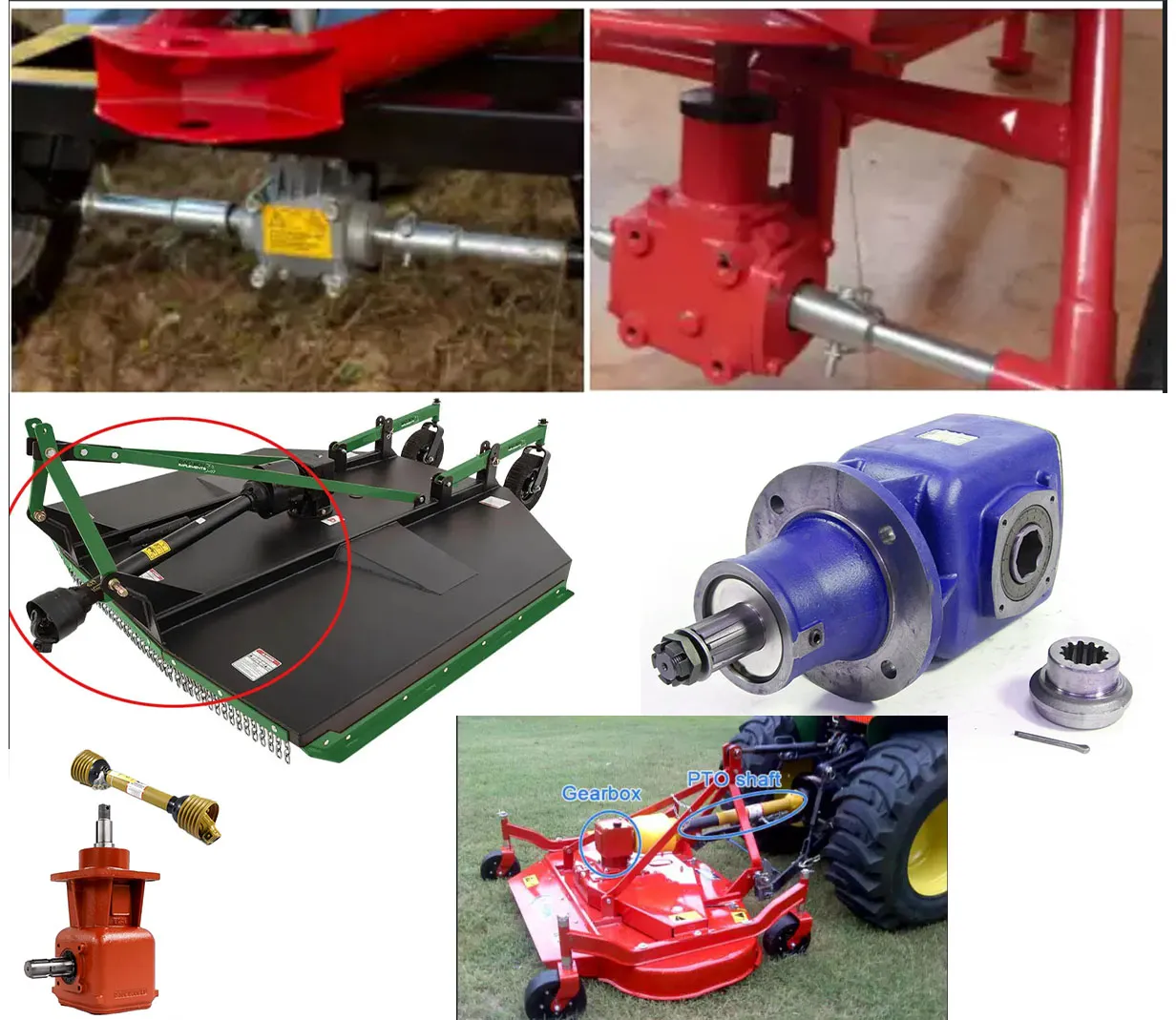
The integration of the elevator slew gearbox within the hydraulic circuit is a key engineering consideration. Most modern harvesters utilize a hydraulic motor (orbital type) coupled directly to the slew gearbox input. This eliminates the need for complex mechanical linkages or a agricultural gearbox driven by belts. The hydraulic system provides built-in overload protection via pressure relief valves, but the gearbox itself must be rated to handle “shock loads”—the sudden impact forces generated when a swinging elevator stops abruptly or hits a physical obstruction.
Furthermore, the environmental sealing of these units is paramount. Whether operating in the humid, dusty fields of Jeollanam-do (for forage harvesters using similar technology) or the tropical zones of export markets, the gearbox is subjected to a mix of abrasive dust, cane juice (which is acidic and sticky), and heavy rain. Our designs incorporate multi-lip cassette seals and protected breather vents that prevent internal pressure buildup without allowing moisture ingress. This attention to tribology extends the life of the lubricant and prevents the common failure mode of seal blowout due to thermal expansion.
Technical Specifications: Series ES-500 Slew Drive
The following specifications represent our standard configuration for mid-to-large class sugarcane harvesters. Custom ratios are available to match specific hydraulic motor displacements.
| Parameter | Specification Data | Engineering Note |
|---|---|---|
| Reduction Ratio | 30:1 to 60:1 | High ratio required for self-locking functionality. |
| Output Torque (Nominal) | 1,200 Nm – 3,500 Nm | Varies based on elevator arm length and capacity. |
| Holding Torque (Static) | Max 5,000 Nm | Critical for safety on inclines up to 20 degrees. |
| Input Speed | Max 500 RPM | Driven by orbital hydraulic motors. |
| Worm Gear Material | CuSn12Ni Bronze | Superior wear resistance and heat dissipation. |
| Housing Material | QT450-10 Ductile Iron | Resists impact fracturing better than grey iron. |
| Lubrication | Synthetic Gear Oil (ISO VG 320) | Required for high sliding friction of worm gears. |
Why OEMs Choose Ever-Power for Drivetrain Solutions
Selecting a transmission partner is a decision that impacts the reliability of your entire machine line. At Ever-Power, we distinguish ourselves through a holistic approach to agricultural power transmission. Unlike generic gear shops, we understand the specific “pain points” of harvesting machinery—specifically the downtime caused by component failure during the critical 90-day harvest window. Our manufacturing facility is equipped with state-of-the-art Gleason hobbing machines and rigorous heat-treatment furnaces, allowing us to control the metallurgical structure of every elevator slew gearbox we produce.
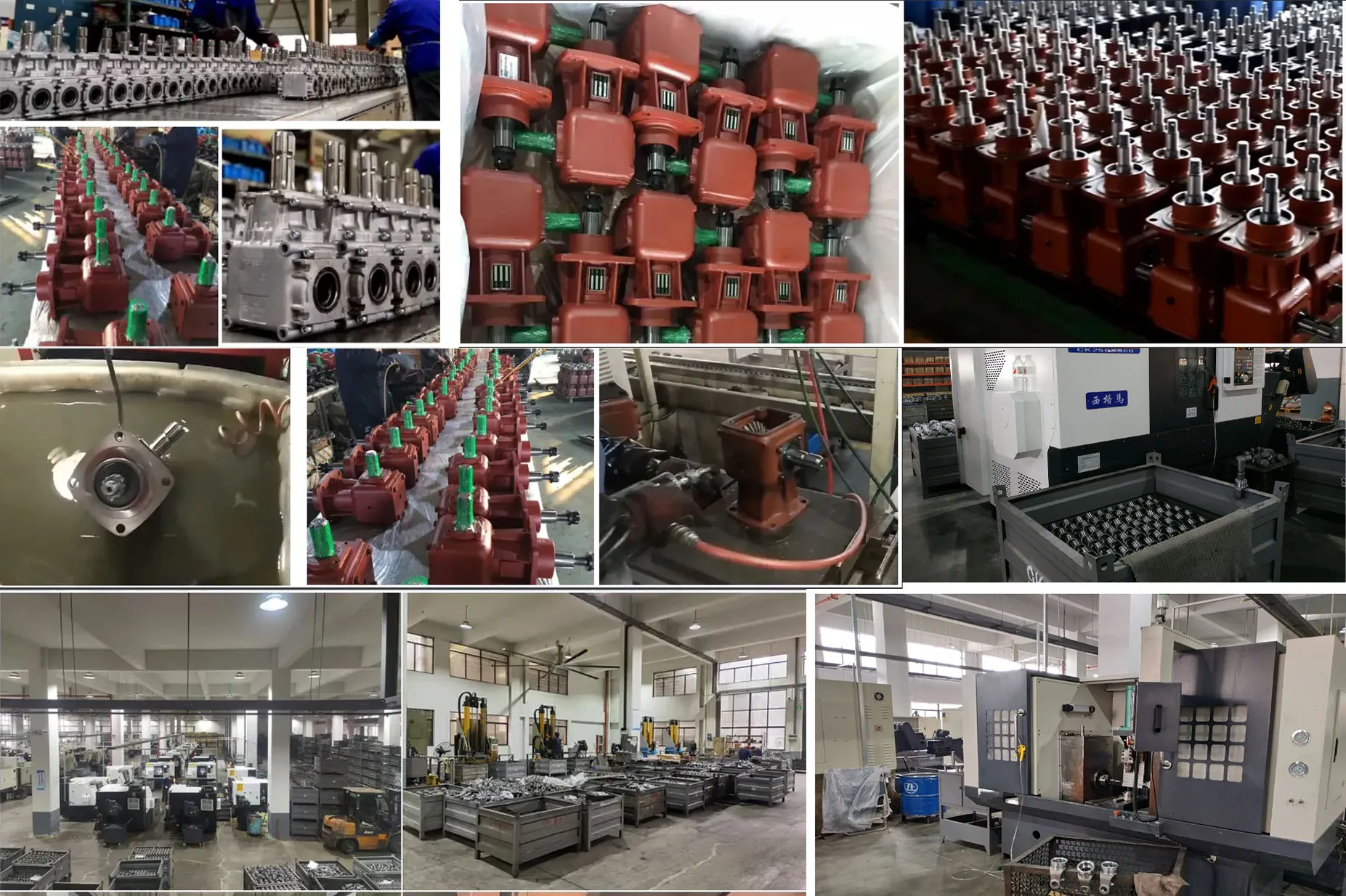
We go beyond simple gear cutting. Our engineering team conducts comprehensive finite element analysis (FEA) on the housing designs to identify stress concentrations that could lead to cracking under heavy loads. This is particularly relevant for the slew drive, which acts as a structural member supporting the elevator mass. Our testing protocols mimic the start-stop cycles of field operation, ensuring that the self-locking mechanism remains effective even after thousands of cycles. Furthermore, our supply chain is integrated; whether you require a agricultural pto gearbox for the base cutter or a specialized slew drive, we offer a single source for validation and procurement.
For the Korean market and international exporters, we offer localized support documentation and compliance with global safety standards. Our commitment to quality means that every unit is leak-tested and backlash-verified before leaving the factory. We understand that a $500 gearbox failure can halt a $300,000 harvester, and our quality assurance processes are designed to mitigate that risk entirely.
Field Performance: Validated in the Toughest Terrains
Case Study 1: South Korea (Jeju Smart Farm Project)
Application: A Korean specialized machinery manufacturer developed a multi-purpose forage harvester for the heavy biomass crops on Jeju Island. The machine utilized a slewing discharge chute similar to sugarcane elevators.
Challenge: The coastal environment of Jeju introduced high salinity, causing rapid corrosion of standard actuator shafts. Additionally, the gusty winds on the island created unpredictable side-loads on the discharge arm.
Solution: We supplied a modified elevator slew gearbox featuring a nitro-carburized output shaft and a triple-layer epoxy coating. We also tightened the worm gear backlash tolerance to reduce wind-induced “chatter.”
Result: The upgraded units passed the 500-hour salt spray test (KS D 9502 equivalent) and provided stable operation during high-wind harvest days, securing the OEM a government supply contract.
Case Study 2: Thailand (Khon Kaen Sugarcane Belt)
Application: Retrofitting older harvesters where the original chain-drive slew systems were failing due to dust ingress and chain stretch.
Challenge: Operators needed a maintenance-free solution that could be installed in remote field workshops. The solution had to integrate with existing low-pressure hydraulic systems.
Solution: We provided a “drop-in” elevator slew gearbox kit with a custom adapter plate. The unit was pre-filled with long-life synthetic lubricant.
Result: Downtime related to elevator jamming was reduced by 90%. The sealed gearbox design proved impervious to the fine silica dust common in the region.
Case Study 3: Brazil (Mato Grosso Large Estate)
Application: High-capacity harvesters running 24/7 operations. The slew drives were overheating due to constant adjustments by operators to optimize loading.
Challenge: Standard worm gearboxes were exceeding thermal limits (90°C+), leading to seal failure and oil leaks.
Solution: Ever-Power engineered a finned aluminum housing version of the elevator slew gearbox to improve thermal dissipation. We also upgraded the worm wheel material to a high-thermal-conductivity bronze alloy.
Result: Operating temperatures dropped by 15°C, significantly extending seal life and maintenance intervals.
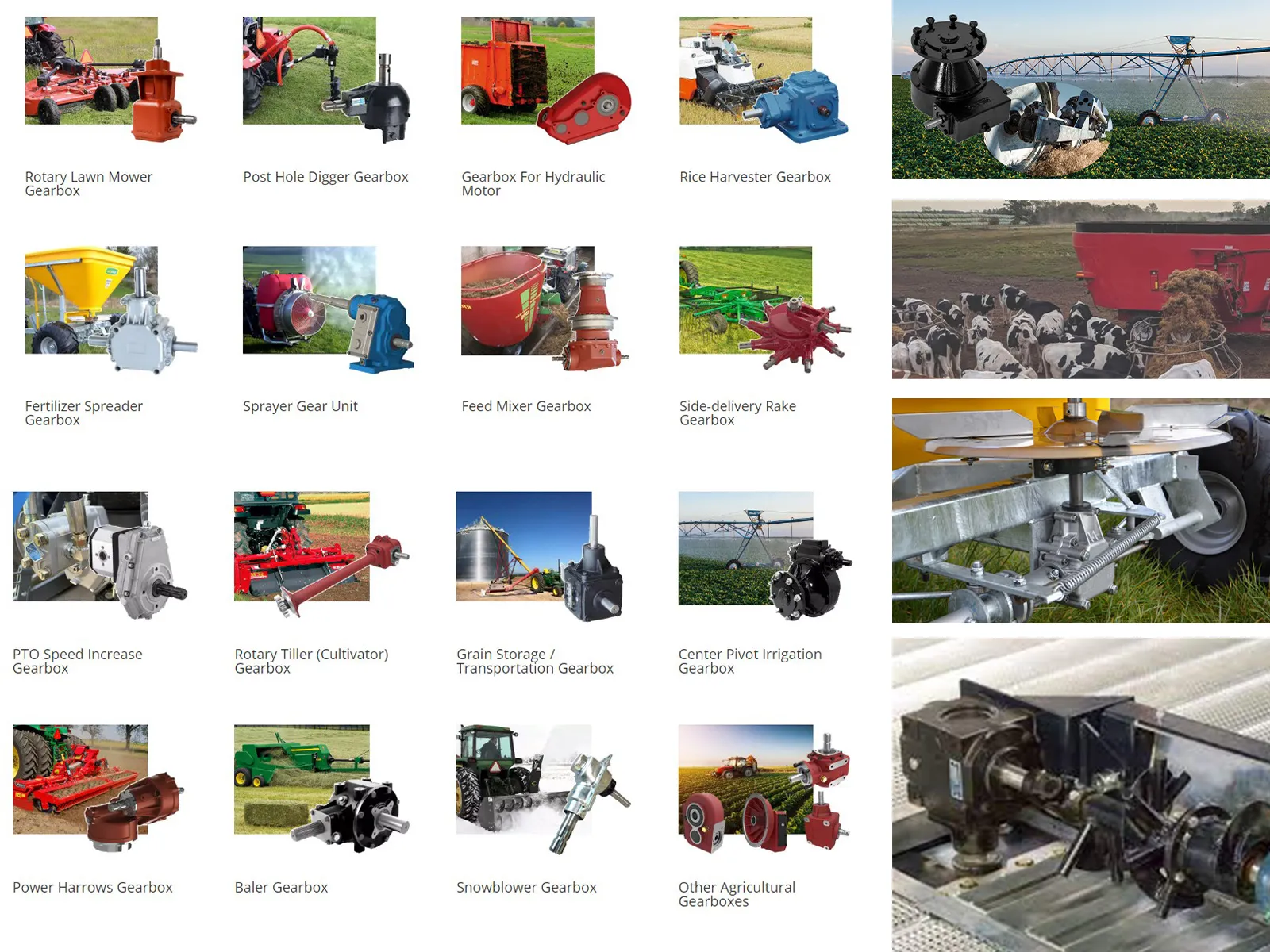
Complete Your Drivetrain: Related Products
A gearbox never works alone. Ensure system integrity with our matched components.
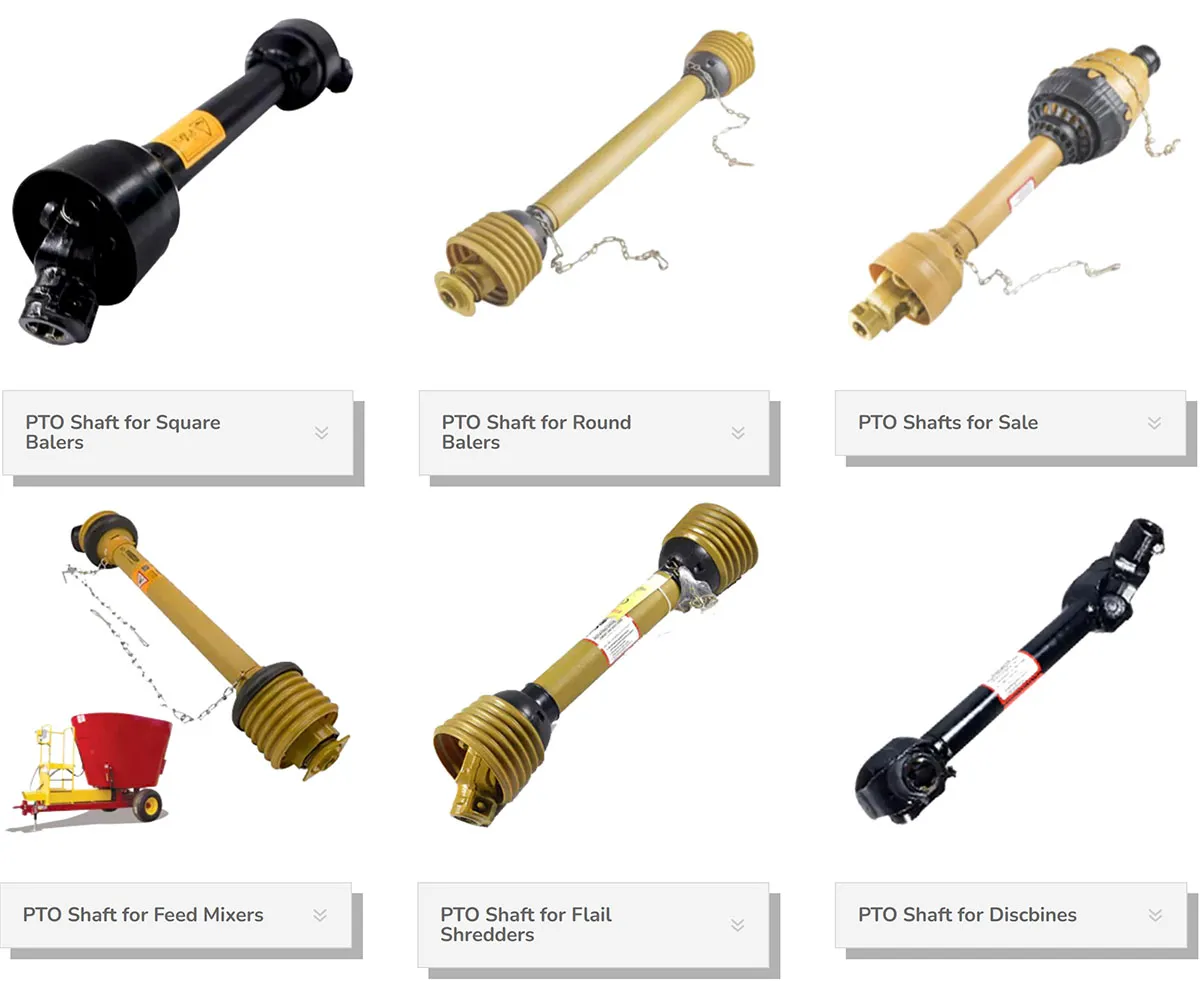
Wide-Angle PTO Shafts
Essential for turning at headlands without disengaging power. Includes shear-bolt protection.
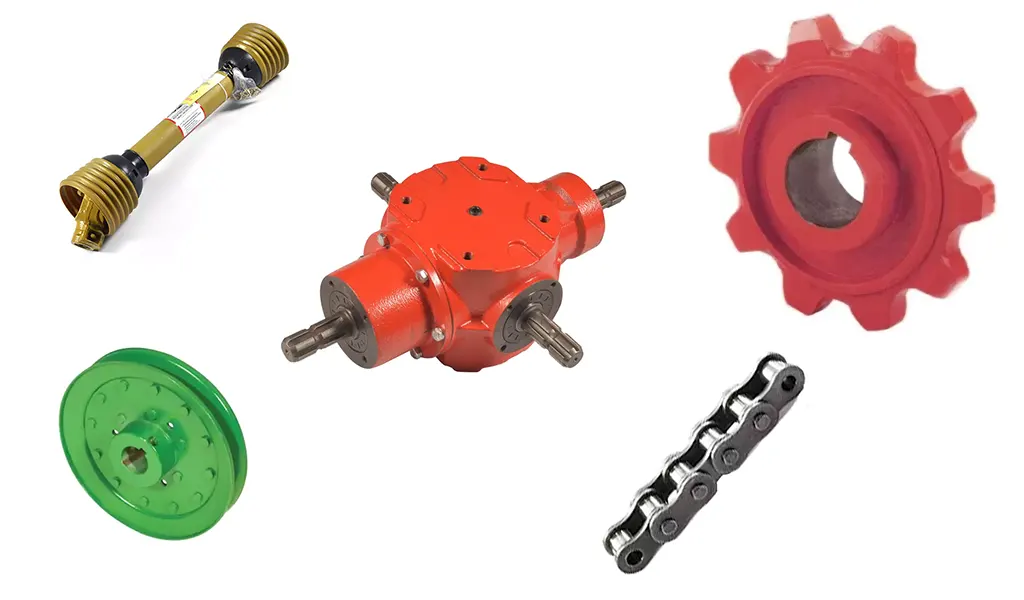
Chain & Sprocket Drives
For side-drive tillers. High-strength roller chains (ANSI 80/100) matched to our gearboxes.
Frequently Asked Questions (FAQ)
Q1: Does the elevator slew gearbox require an external brake?
Generally, no. Our worm gear designs feature a self-locking geometry (typically with a lead angle of less than 5 degrees). This prevents the weight of the elevator from back-driving the gearbox, effectively acting as a parking brake. However, for extremely heavy elevators or steep terrain, an additional hydraulic holding valve is recommended for redundancy.
Q2: What is the maintenance interval for these units?
For standard operation, we recommend an initial oil change after the first 50 hours (break-in period), followed by changes every 1,000 hours or annually. In dusty environments like those found in Korea or Australia, inspecting the breather vent and shaft seals daily is crucial to prevent contamination.
Q3: Can this gearbox replace a slewing ring bearing system?
It depends on the design. Some harvesters use a large slewing ring driven by a pinion. In this case, our elevator slew gearbox would be the “pinion driver.” Other designs use the gearbox output shaft to directly rotate the turret. We offer solutions for both architectures.
Q4: Is the gearbox compatible with standard PTO shafts?
While most slew drives are hydraulically driven, we do manufacture versions with splined input shafts compatible with small pto gearbox setups or mechanical linkages, though this is less common in modern harvesters.
Q5: How do I identify if my slew gearbox is worn out?
Excessive “play” or free movement in the elevator arm when the hydraulics are neutral is the primary sign. This indicates worn worm gear teeth. Other signs include overheating, groaning noises during rotation, or hydraulic motor hunting.
Optimize Your Harvest Logistics Today
Don’t let a faulty slew drive bottleneck your production. Contact our engineering team for a direct replacement or a custom OEM solution.